Tim Jackson Web
  • Home
  • Film Reviews
  • Actor
  • Films
  • Drums
  • Misc.
  • Photos
  • Drummer Bios and Memoirs
  • Concert History
  • Blog
  • Misc. Reviews
  • Night Visitors
  • Misc
  • Misc. Videos
  • CV
  • Blog
  • BESTS OF 2016
  • SOME BANDS
  • Video Essays
  • Boston Films
  • Herzog
  • Humankind
  • MISC.
  • BOOKS
  • Theater
  • Hitchcock Acting
  • Best of 2019
  • Best 2018
  • Best 2017
  • Best 2016
  • Best 2015
  • Best 2014
  • BEST 2013
  • Forgotten Bands
  • Marriage
  • Bill Staines
  • New Page
  • Misc. Writing
  • Interviews, Books
  • Moloka’i Bound
  • The Kingdom

R&R War Stories and Music WMBR w/ the Mighty Slim

3/23/2014

0 Comments

 
A funny day of stories and 60's nuggets on MIT radio WMBR with Lost and Found and the incredible DJ Mighty Slim.

The show on Soundcloud
Stories and great tunes

Picture
The Mighty Slim

0 Comments

Alternative Titles

3/12/2014

0 Comments

 
If you know the subject of the film When Things Go Wrong: Robin Lane's Story then you can understand that these titles are actually fitting , though a little to clever for their own good. They came to me a flash.  Robin (nee Lipschitz) likes them. I suppose they might have other places where they could work as titles.
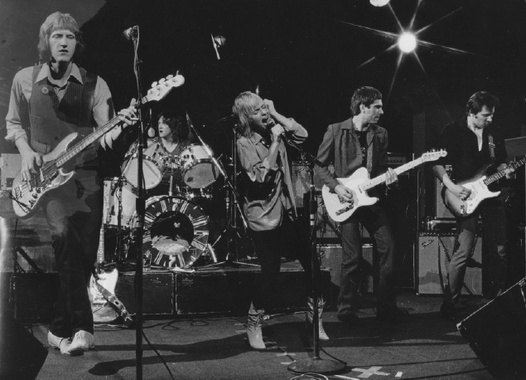
1. The Sound of Other Music: The Robin Lane Story
2. Guise and Dolls: Searching for the Real Robin Lane
3. Our Bodies, Our Songs: The Feminist Art of Robin Lane
4. Loving Lipschitz: The Re-invention of Robin Lane
5. I Don't Wanna Know: The Parodox of Robin Lane
6. No Woman is an Island: The Troubled Life of Robin Lane
7. My Sheep Hear my Voice, I Know Them, and They Follow Me: A Feminist Theological Interpretation of the Robin Lane Narrative
8. I Used to Be Indecisive, Now I'm Not So Sure: The Fickle Brain Of Robin Lane
9. Lembo, Leroy, Love, Loss, and Pain: The Looney Mind of Robin Lane
10. How to Succeed in Music Without Really Crying: The Resurrection of Robin Lane


0 Comments

First Screening

3/11/2014

0 Comments

 
The Screening Link
The Web Site Link
Picture
0 Comments

Three New York Shows

2/24/2014

0 Comments

 
Read at whole article at Arts Fuse 

Three wildly divergent plays currently off Broadway in New York turn their sights on themes of love and sex. Intimacy, Stage Kiss, and Love and Information each approach the metaphysics and chemistry of love with humor and pathos, but with entirely different perspectives on the confusion and difficulties of contemporary romance.

Intimacy

The most provocative of the three stagings is the New Group’s production of Thomas Bradshaw’s Intimacy, directed by Scott Elliott at the Acorn Theater. It may be the most scandalous evening of theater I’ve seen in some time: this is a promising new playwright who pricks us with such glee that it is impossible not to laugh while you gasp at the script’s audacity. It’s been a while since The New England Watch and Ward Society or “banned in Boston” held sway here, but I am pretty sure this show will never play Beantown.

Set in the suburbs, the story follows three families: James is a devout widower with a dark secret whose horny teenaged son, Matt, is learning about the art of frottage (look it up) from Sarah, the bright daughter of Fred, a neighbor and contractor whose sexuality is conflicted. Next door lives a mixed race couple, Jerry and his older wife Pat and their young, beautiful, and zaftig daughter Janet, who they discover has a side job as a rising porn star.

To put it mildly, the stage is set for some bawdy antics. In the course of a very coarse evening the audience will be offered (or subjected to, depending on your level of discomfort) discussions and/or demonstrations of just about every sex act commonly practiced between men and women, including imaginative combinations thereof. The play is structured like a cheesy pornographic movie. Everybody is obsessed with sex, wants to try everything, and to do it with everybody else. When Matt decides to use a gift of $40,000 from his father to make a frottage porno film starring Janet, things gets sticky. To even describe the goings-on, the body parts on full display, the uses of video, and the x-rated discussions, would be test the limits of good taste. The question is – why sit through all this. Does it have a point beyond titillation?

Pornography is a 100 billion dollar international business. Whether it is prime-time twerking, late night male enhancement products, Scandal, True Blood, or Talk Sex starring the grandmotherly Sue Johanson, we are nation both addicted and repressed. While the play may be shocking, the sex is not sexy and the dialogue is surprisingly humorous, fearlessly unrelenting to the point of the farcical. There is a saying: “Everybody does it, and nobody talks about it.” Well, they do here. And while the play is not for everyone, Bradshaw quite logically demands that form match subject. Beyond the ultra- frank conversations, he raises difficult questions of female empowerment, sexual and racial identity, and even elder and teenage sexuality. The Internet has raised the stakes for the libido. Beyond the laughs and gasps,Intimacy demands that there be a cultural conversation about the impact that pornography has and will continue to have on relationships, families, and society.
Stage Kiss

Stage Kiss, Sara Ruhl’s new play at Playwright’s Horizon, takes an entirely different tack on similar themes. An actress, referred to only as “She,” arrives at an audition. She hasn’t worked in a while, but exudes the pizzazz of a seasoned pro, though she’s a little discombobulated. Marvelously played by Jessica Hecht with a halting, wounded confidence, ‘She’ ends up cast opposite an ex-lover (‘He’ played by Dominic Fumusa) an actor with whom she once had a passionate and volatile relationship. Instead of the illusion of sexuality as intimacy, which is explored in Thomas Bradshaw’s play, here the delusion of romantic expectation is dissected. The two are required to kiss night after night in a revival of a tawdry ’30′s musical comedy of manners, and the relationship gets out of hand. She is married and well-off, while he is neither. Acting, it is often said, is the art of being real in imaginary circumstances. The physical act of kissing is very real, emotional, and intimate. Actors often fall in live with other actors in the course of a production, so the idea of rekindled love is entirely plausible.

But as she does so well in plays such as Dead Man’s Cell Phone and In The Next Room, or The Vibrator Play, Ruhl expands on her initial premise, moving into a comic as well as poetic take on artifice and actuality. As She, Hecht has a disconcerting way of glancing at the audience as though she is watching us, knowing we are watching her. Meanwhile, she rehearses the play-within-in-the-play, continually breaking the spell to ask for feedback from the director (a perfectly fey and efficient Patrick Kerr). She immerses herself in the dreadful writing and music of the tacky melodrama as she slips back into a reverie of romance with her co-star and former lover. This is much to the dismay of her husband, and grown daughter who we meet in the second act and who are doubled by actors from the first act.

At times what should be ‘reality’ begins to resemble a bad ’30s play. Later on, when She and He are cast in another dreadful play, this one written by the director, romance, role-playing, language, and music become hopelessly intertwined. Ruhl plays with layers of farce and artifice, reality and performance with an obvious affection for the craziness of the craft and the people who practice and love theater. Take this exchange for example, which is particularly ironic in light of the play Intimacy. Here the characters are trying to deal with the fact they are forced to kiss on stage dozens of time a week.

She:
Why do you think people enjoy watching other people kiss on stage anyway?
He:
They don’t enjoy it. They tolerate it.
She:
What do you mean?
He:
They tolerate it because it signifies resolution, which people like to see on stage but they don’t really like to see the act of kissing onstage only the idea of kissing onstage. That’s why actors have to be good-looking because it’s about an idea, an idea of beauty completing itself. You don’t like to see people do more than kiss on stage/ It’s repulsive.
She:
But why do we want to see people have sex in the movies?
He:
That’s because you can be alone in your own mind when you watch a movie and it’s like masturbation but you can’t be alone when you watch a play because there’s always someone next to you. That’s why it’s uncomfortable to watch people have sex on stage but pleasant to watch them have sex in movies. That’s why porn stars don’t have to be as good-looking as actors because we’re not watching the idea of sex, but sex itself, which can be ugly. That’s why the theater is superior to film because it’s less like masturbation.


Love and Information

The most remarkable of the three productions is Love and Information by Caryl Churchill (Top Girls, Mad Forest, Cloud Nine) at the Minetta Lane Theater. A large cast of men and women of varying ages and races perform 57 short scenes in just over two hours. Several are only one line long, while others serve up brusque, compelling scenarios. Each provides a piece of a the play’s intriguing rumination on the nature of love, science, language, relationships, the natural world, and, well, the universe.

The production is directed by the playwright’s frequent collaborator, James Macdonald, on a set designed by Miriam Buether. It is a square cube wallpapered on all sides, top and bottom, by enlarged graph paper. Each group or couple appears in rapid succession as if they are being measured and analyzed in some experiment in a laboratory run by the gods. As each scene ends, the stage goes absolutely black and sounds come up that provide an aural transition which covers up the mechanics of the set change. Try as you can, you cannot see into that blackened cube. Suddenly another scene flashes into place – a fresh set of characters, props, and set pieces, appear as if by magic. It is a stunning effect.

Thankfully, this is more than a gimmick of staging and the writing goes beyond satiric comments on our fractured attention spans in the Internet age. The challenge of trying to piece together the logic of the five “chapters” in which the scenes present themselves, or to imagine the backstory and context of such an enormous range of sharply written bits of conversation, is dizzying and powerful. A man asks another, “How do you know I’m evil?” A male and female clown in dazzling outfits discuss fortune telling, finally revealing they are in an adulterous relationship. A man with no short-term memory is led to a piano (“I can’t play this”) as he proceeds to read a score while accompanying an opera singer. Two gay men discuss the color red. A boy with congenital analgesia (in which a person cannot feel physical pain) asks his sitter (?) to explain what “pain” is like. Following a night out, a wealthy couple in formal wear discuss and argue over math. Two Elvis impersonators have a quick exchange on the Palestine -Israeli conflict. There is even a scene where a man talks about being in love with his computer program. (The play was produced in London before the release of the film, Her)

The tiny ruminations and conversations — varying from the casual to the calamitous — consider memory, the past, the future, biology, language, the stars, fate, God, and more. Intellect and imagination struggle to see an overarching theme or to envision a plausible story behind each scene. The overall effect is a mirror of the chaos of contemporary life, which is more than ever a collection of stories, experiences, facts, fancies, and emotional responses from which we try to draw sense and meaning. It is an existential and deeply human look at how we think, how we process information, and how we come to understand the world and ourselves. Ultimately, the play dramatizes the limits of language and science when it comes to understanding the human heart.

0 Comments

Tips For a Long Marriage

2/22/2014

0 Comments

 
With all the writing lately on marriage and happiness, and this being Valentine’s Day, and at the risk of being presumptuous, allow me to share some accumulated wisdom that allegedly has been gained with age and experience.

By Tim Jackson
 With all the writing lately on marriage and happiness, and at the risk of being presumptuous, allow me to share some accumulated wisdom that allegedly has been gained with age and experience, and because, after an unnatural number of years together, people always ask “how do you do it?”

Disclaimer: 
These are highly subjective, meant to implicate no one, nor invoke any individual, or individuals. As they say, this is ‘based on a true story.’
Humor: 
A marriage without laughter is big trouble. The world can be oppressive, but it is also amazing and outlandish. People are ridiculous. Everybody wants your money. If you’re both still alive and are able to provoke a regular chortle or guffaw, that’s sheer good fortune. Misbehave regularly.
Love: Of course chemistry, admiration, need, respect, communication, and such things are key. But in truth, love is born out of chemistry and shaped through time. Two other opinions: overpriced engagement rings is a ridiculous custom and a little jealousy in marriage can be invigorating.
Sex: I say lust is the core of a good marriage. It’s handy for procreation, but evolves into comic opera. Adultery is a word forced on us by the church. Work it out for yourself.
Friendship: 
Your partner is often the person who sees you the way you want to see yourself, and is often your best audience. That’s a lot to be thankful for because you may not be as interesting as you think.
Autonomy: You want that partner to be like you. It doesn’t happen.
Patience: If you’re going to stay together for 350,000 hours, then that one hour where you’re really pissed off is pretty insignificant.
Reinvention: If you are lucky, you will both become at least three other people over four decades.
Variety: Predictability is numbing
Curiosity: From a vacation in Rome to talking to the guy who collects bottles from your trash, it’s all fascinating. You are lucky, and you have someone to ask why and how about everything.
The Arts: It generates conversation that isn’t about whether you cleaned the grill, walked the dog, or saw the game. If you don’t read, life is harder. All the better if you see the inside of a theater or museum a lot.
Physical Activity: 
It helps to regularly, or even occasionally, do anything together until you are feeble: hike, bike, tennis, or yoga until the body rebels.
Vanity: 
Take care of yourself, and try to look good without surgery. We all eventually end up with, as Phillip Roth calls it, “the external body that time has bestowed,” not to mention that we will “get the faces we deserve.’
Friends: 
It’s great that so many long-term friendships survive. Others revive, are rediscovered, or revisited. New friends don’t threaten anything. Have your own pals and maybe another best friend because you don’t really tell your spouse everything – I hope.
Family: 
You marry into one, but it’s not the be-all, end-all. It takes too many forms and, let’s face it, you won’t like everyone. Family happens whether with kids or not, but for us, kids are the best, funniest, most interesting and challenging thing that ever happened.
Compassion: 
This is the bottom line.
THINGS TO AVOID
Ceremony: 
To each his own. but I never wore a ring, and we always forget our anniversaries. Wedding parties are nice, but bridesmaids and bachelor parties weren’t part of getting started. Baptism? My kids were not born in sin. Bar/Bat Mitzvahs. Oh, OK. But a bris? Though I hear the tips are good. (rim shot)
Religion: Whatever works for you is dandy because for an atheist this is irrelevant, but pious self-righteousness is unforgivable in god’s eyes.
Wealth: What is it? You’ll never get there anyway, unless you want to spout clichés about real wealth not being about money.
Boredom: 
Never be bored
Competition: Education and jobs needn’t be a competition. Be a lifelong learner.
Platitudes:
 Affirmations, aphorisms and sayings and such sound good and mean well, and are helpful once in a while, but they require nothing but hot air. Action speaks louder. Get off Facebook and do something that actually embodies that latest Dalai Lama quote or Move On imperative.


0 Comments

Mock Rock Journal Review

2/20/2014

0 Comments

 
Picture
I wrote this is mock review of a Robin Lane and the Chartbusters reunion and it actually got taken seriously.  Parts were reprinted in various reviews. I guess it’s fine line between parody and hyberbole in the world of rock crit! 
There IS no Rock Vanity Journal that I know of. . . .

The Return of The Chartbusters 
From Rock Vanity Journal

by Tim Jackson

It was the 80’s. Or was it the 70’s? The sweating bodies that undulated in a drug and music induced ecstasy could care less. The throaty primal warbling of Robin Lane charged the air and her band the Chartbusters attacked its audience with incendiary guitar and rhythm assaults.

Like the many shows that had enthralled millions of hypnotized fans around the country this one was approaching orgiastic levels. It was just another night for Boston’s premier proto-punk-new wave-folk-chick-Christian-guitar-rock septet.

Now at last, as if a frozen behemoth of another age had lumbered from the ice to rampage anew, Robin Lane and the Chartbusters is back. Together with punk-rock-God and guitar maestro and producer David Minehan the original band has set forth from the appropriately named Woolly Mammoth Studio to bring to an adoring public more remarkable gems of musical wonder.

Has Lane been fallow all these tears? Hardly. She has spent the past two decades sharpening her skills, honing her songwriting to new levels, deepening her vision, living hard and turning that experience into lyrical visions. Now, back with her boys, new and never-before recorded masterpieces are available on a CD called “When Things Go Right.”

The astonishing chemistry of the Chartbusters that made for some of Boston rock’s most brilliant live moments is back in full charge. Throughout the years the band has continued to work at their respective musical visions and has together shared moments of life and love, hope and tragedy, never losing touch with one another, never losing the keen edge of their combined musical genius. With their new CD they return like samurai warriors focused, committed and ready for battle.

Rock Adonis Asa Brebner has pulled from the ranks of Cambridge’s leading guitarists the redoubtable Pat Wallace to replace the one loss to the original group, who is reported incarcerated. The intricate guitar thrashing of the Chartbusters is now deepened in texture through age and experience and approaches previously unrecognized levels of sensitivity and awareness. Despite his dwarfish physiognomy, drummer Tim Jackson provides almost poignant drum rhythms of alarming simplicity, while lumbering giant Scott Baerenwald’s bass pulses with a tender sensitivity and substantive sexiness.

Grab this CD and you will feel not only the power that once enthralled millions, if not thousands. To quote English Author and Jewish Leader Israel Zangwill:
“The Past: Our cradle, not our prison; there is danger as well as appeal in its glamour. The past is for inspiration, not imitation, for continuation, not repetition.”
Get yours TODAY!

photo credit: Paul McAlpine

0 Comments

February 9th, 1964

2/9/2014

0 Comments

 
“Hey, you kids want tickets to see the Beatles?”

The father of my best friend’s girlfriend—who was the best friend of my sort-of-but-not-really girlfriend—was in the advertising business and his agency had a big client—”The Ed Sullivan Show.” He was given four tickets to see this new band everyone was crazy about. On Sunday, February 9th, 1964, we boarded a train from Westport, Connecticut, to New York to see the Beatles’ first-ever performance on “The Ed Sullivan Show.” While hysteria was in the air, and lots of jealousy among our classmates, it didn’t actually dawn on us until decades later that we had witnessed a pivotal moment in American culture.

At 14 years old, we needed some inspiration. Two months earlier, the world had changed forever, shaking our wide-eyed belief in America. I recall just before Kennedy’s assassination asking my middle school teacher to explain communism to us. After all, we had just been through a moment of possible annihilation via the Cuban Missile Crisis. In elementary school we had learned to jump under a desk and cover our faces in the event of an atomic bomb attack. I had friends whose families built bomb shelters. At 13, I had grabbed my parent’s 8mm camera and made a film with the neighborhood kids called “The End of the World” where we blew up a miniature city and came back to life as “mutants.” Asking a social studies teacher to explain who these people were who were out to destroy our way of life seemed a reasonable request. But, visibly nervous, he told us to wait until we were older and we could understand the issues better.

My father, a scrappy, self-educated Brooklyn kid, had reinvented himself, Don Draper–like, in the ad business. But he was a suitcase-hugging traveling salesman rather than a martini-toting Mad Man. His job was downsized and he was out of work by 50. My parents had voted Socialist for Norman Thomas, and the IRS mysteriously audited my father every single year. He was bitter, but never without a good joke and lots of optimism. My mother played piano, sang sea shanties, and loved most rock and roll.

We had seen the Beatles on The Jack Parr Show the year before. Parr kind of smirked at this crazy phenomenon sweeping England (“It’s nice to know England has finally risen to our cultural level,” he said sarcastically). He aired a fuzzy black-and-white film clip from England of teenage girls screaming as the band performed a snippet of “She Loves You.” I had been playing drums in the middle school orchestra, where I was kicked out for not being serious enough. In the school band I had been demoted to carrying the bass drum in the local Fourth of July Parade. I was ready for something better.

We arrived at the theater and getting to our seats was pretty smooth. Huge crowds were gathered outside, but much of the really serious frenzy took place outside the Beatles hotel. Once in the theater the atmosphere of hysteria was tangible. Fifty years later all four of us recall one essential fact: we were in 10th Row Left Orchestra.

As soon as we sat down the screaming began. If something moved in the wings someone would point at it, as if the Beatles might be wandering around backstage or crawling up in the flies. Everyone would look and scream. There was a feeling that the place might get out of control at any moment. So what does Sullivan do? Right before the show is scheduled to go on the air in front of 73 million people, he comes out from behind the curtain and says to the crowd of turbulent teens: “If you ‘youngsters’ don’t behave yourselves, I’m not going to bring the band out.” The high school principal had taken the stage!

I can barely remember any of the other acts—the Broadway cast of the musical Oliver with future Monkee Davy Jones, Frank Gorshin (I loved his impression of James Cagney), comedians Mitzi McCall & Charlie Brill, singer Tessie O’Shea, magician Fred Kapps, and acrobats Wells & the Four Fays. Sitting in front of us in the 9th row was Randy Parr, Jack’s daughter. An ongoing feud had been going on between Sullivan and Parr. Union rules required Sullivan to pay his live performers more than Paar did for filmed performances, and Ed was pissed. But when Parr showed film of the Beatles and mentioned their upcoming appearance on “The Ed Sullivan Show,” Ed was forgiving. (Paar always and rightfully claimed’ “I was first to show them in this country—not Sullivan.”) Sullivan provided Parr’s daughter with three tickets. After explaining to the audience that this was a moment of public reconciliation, she was introduced: “Ladies and gentleman, in the audience tonight—Rrrrandy Parrrrr.” What we didn’t know at the time was that sitting right in front of us were her two guests — Julie and Tricia Nixon!

Finally, our stiff-necked host introduced the “youngsters from Liverpool.” With a sweep of his arm he announced “Ladies and Gentlemen, the Beatles.” They counted off the song—”All My Loving”—and immediately the screaming drowned out the music. The Beatles were so close and full of smiles. The set was vivid shades of blue and black and grey. The stage was smaller than our school auditorium. Ringo looked precarious on that tiny riser. Paul was left-handed! The rest of America was watching a small black-and-white screen. To us, it felt a bit unreal. Occasionally there would be a lull and the music would leak through, but quickly the screams would rise again. I shouted into my friend’s ear, “Let’s scream as loud as we can and see if we can hear ourselves.” We did. We couldn’t.

Last year I did an interview with someone writing a book on the Beatles’ impact on America, and for the first time took stock of that night. There were so many musicians who say that this was the moment they decided that rock and roll was something they could do. Plus girls screamed! This music breathed life into a country that had been traumatized. I never again felt complete trust in established order after the Warren Report’s attempt to explain Kennedy’s murder. The worst horrors of Vietnam were looming. The world was changing and we were impressionable adolescents ready to go with a new flow. The Beatles led the charge. The following year, 1965, I was at The Newport Folk Festival when Bob Dylan came out and played amplified folk music. We couldn’t afford to buy tickets, but heard it all from outside the fence. Nothing would ever be the same.

I practiced furiously and within a year I was in a high school rock band. We opened shows for The Young Rascals. I was hooked. In October of 1966, at Staples High School, The Yardbirds, with both Jeff Beck and Jimmy Page and their opening act The Chain Reaction (with Steven Tyler), used my band’s PA system to play the auditorium. Within the next ten years I shared the stage in bands that opened for BB King, The Mahavishnu Orchestra, Iggy and the Stooges, The Chambers Brothers, Aerosmith, J. Geils, Manfred Mann, Bruce Springsteen and the E Street band (in a Rhode Island high school gymnasium), Little Feat, the Wailers (both at Paul’s Mall) and Grand Funk Railroad at Boston University. These were heady times indeed. Sixteen years later, with Robin Lane and the Chartbusters, I was part of the 11th band to be aired on MTV.

I’m still setting up a drum kit and hauling it to the occasional gigs. Playing music has influenced my life in countless ways. Looking back it’s fair to say, like so many others, that it all started sitting in that theater on February 9th, 1964.
0 Comments

Best and Worst of 2013

1/1/2014

0 Comments

 
Six categories covered most of my favorite films in 2013, with one stand-alone exception. Thus I decided to mix narrative and documentary movies and list them in groups. The result is a Top 20 list, but it was a very good year.
Stand Alone
The Wolf of Wall Street – Director Martin Scorcese has created a testosterone-fueled orgy of sex, drugs and money. The violence of his best gangster films gives way here to madcap comedy, but it is no less obscene. DiCaprio is insanely brilliant. If you think it glorifies these money-men, write Washington, not the filmmaker. We are all culpable. America went off the rails with greed and hubris. There’s a powerful and subtle message in the very last shot of the film. Fuse Review
Love and Sex
1) Her – It is creepy and romantic and poses all kinds of questions about the nature of relationships in a solipsistic age. The acting and photography are superb. Actor Joaquin Pheonix never fails to maintain the perfect histrionic pitch in nearly two hours of close ups as he talks to his operating system. Fuse Review
2) Blue is the Warmest Color – The heavily erotic scenes got much of the attention, receiving both positive and negative criticism. Shot largely in close up, actresses Léa Seydoux and young Adèle Exarchopoulos (in particular) nimbly create the emotional topography of first love. The eroticism is needed to anchor the director’s portrait of passion. I was riveted. Fuse Review
3) Spring Breakers – Harmony Korine marches to his own drummer and this gonzo beach party gangsta movie came off as a brilliant stunt, a Situationist act of commercial debauchery. Exiting the theater, I heard a mother apologizing to her daughter: “I’m sorry, honey, I didn’t realize what we were seeing.” Fuse Review
Non-Fiction / Fiction Blends
1) Stories we Tell (documentary) – It’s best to know nothing about how this film was put together when you see it for the first time. Its elegant construction patiently peels away layers of family history and psychological rationalization as it plays with notions of truth and story telling.
2) Caesar Must Die – I expected something like the 2005 documentary Shakespeare Behind Bars, but here the Taviani Brothers use real-life inmates from the maximum-security wing at Rome’s Rebibbia prison to create a production of Shakespeare’s Julius Caesar that is carefully constructed to look like a documentary. Their neo neo-Italian realist approach to filming the process of staging of a play about murder and power with real gangsters playing actors playing conspiratorial roles is dizzying and magnificent.
3) The Act of Killing (documentary) ¬ Indonesian murderers and thugs who had been at the service of the dictatorship in the mid-60’s (America looked the other way) describe their atrocities, demonstrate their methods, and reenact their crimes by way of surreal, Hollywood-like scenarios. It is equally comical and disturbing, leaving the viewer to confront his or her own sense of guilt and helplessness at the madness in the world.
The ’60s
1) Inside Llweyn Davis – While it may leave out much of the politics of the era, the film conjures up the look and music of the pre-Dylan ’60s folk era. The excellent casting and spot-on performances explore the frustrations and hard scrabble life of a struggling musician. Fuse Review
2) Francis Ha – While this story may not take place in the ’60s, the film has the black and white spirit of the French New Wave tattooed all over it. Greta Gerwig finally found a wonderfully rambling and antic script for her energetic talent. Fuse Review
3) Muscle Shoals and 20 Feet From Stardom (documentary) – The former is a history of the Alabama studios that produced unique American music, from Etta James and Aretha Franklin to Lynyrd Skynyrd and many others. The latter is a celebration of great voices that preceded our age where show biz glitz, slick production, and contest winners garner our attention. These ‘back-up’ voices enabled great American music to find its soul.
4) Ginger and Rosa – Writer, musician, and feminist Sally Potter uses the anxious period of the 1962 Cuban missile crisis to background a bittersweet character study and coming-of-age story that involves two working-class British girls. The preternaturally talented Elle Fanning leads a perfect cast that includes Timothy Spall and Christina Hendrix (Mad Men) in a film that leaves you hoping and dreaming.
5) Not Fade Away – This David Chase (The Sopranos) sleeper proffers a rambling ambience that captures the hopes and conflicts of ’60s youth. Having myself been there and done that, I was amazed by the film’s attention to detail, no doubt assisted by knowledge of Steven Van Zandt. The film nails the milieu, and while there are a few clichéd plot twists, the result is honest and charming. Fuse Review

A scene from “Ginger and Rosa.”Race Relations
1) Fruitvale Station – This is an amazing debut film – directed by Ryan Coogler – that celebrates an imperfect perfect life in a way that dignifies its subject. The view of the obscenity of Oscar Grant’s murder by the police reminds us of the tragic injustice of a life wasted, including all its lost potential.
2) Let the Fire Burn (documentary) – Jason Osder uses only archival footage to chronicle the tragic overreaction of police as they removed the radical African-American Move Organization from its Philadelphia row house in 1981. The result was the destruction of 61 homes. It is narrated in part with excerpts from an interview with a survivor, Michael Moses Ward, who at the time of the upheaval was a child known as Birdie Africa. Neither side is blameless, but it is essential to keep the memory and history of the debacle are alive. Sadly, Ward died mysteriously in a cruise ship hot tub before the film was released. Fuse Review
3) The Butler – Lee Daniels tells unconventional stories with a go-for-it attitude. This film appeared to be conventional, but look at it carefully. It dares to take a kind of cartoonish approach in order to educate a wide audience about civil rights for years to come. Any film that casts Jane Fonda as Nancy Reagan is not short on irony. Fuse Review

A scene from “Stories We Tell.”Servitude
1) Paradise: Love – Middle-aged Austrian women exchange their money and their souls for sex with beautiful young black men. It’s a mutual hustle with all the charm of a horse trade. The movie morphs from presenting a facile illusion of romance to exploring the exploitation of one race and culture by another. This a brave and surprising film.
2) 12 Years a Slave – British director Steve McQueen’s unblinking look at American slavery is true to its source, the 19th century memoir by Solomon Northup. It is a harsh exploitation of the horrors of the subject, but one that needed to be done by a black director with a steady gaze. Fuse Review
3) Blackfish (documentary) – An expose of the exploitation and damage done to killer whales and their family herds. Tilikum, a performing killer whale, murdered several people: he had been driven psychotic while kept in captivity. The film makes the case that these are creatures of high emotional intelligence and using them to serve as public amusement is obscene and wrong.
Art Films
1) Beyond the Hills – Romanian director Cristian Mungiu’s fascinating examination of the limits and abuses of religious faith as well as superstition and law. Like his masterful 4 Months, 3 Weeks and 2 Days, the movie exudes a patience and beauty that overwhelms. Fuse Review
2) Post Tenebras Lux – Arrestingly beautiful images, careful sound design, and long patient shots in an ambitious narrative whose meaning comes upon the viewer as if he or she were waking from a dream. It should be viewed more than once — and best on a big screen. Fuse Review
0 Comments
Forward>>

    Archives

    December 2020
    November 2020
    February 2020
    January 2020
    December 2019
    October 2019
    August 2019
    January 2019
    January 2018
    January 2017
    December 2015
    December 2014
    July 2014
    May 2014
    March 2014
    February 2014
    January 2014

    RSS Feed